 |
 |
|
|
 CAGE Code: 3PHY4 |
 |
 |
|
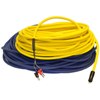
OTS ComRope and Floating Comm Cable
 Ocean
Technology Systems is the Leader in State-of-the-Art Underwater
Communication Systems servicing the Sport, Commercial, Movie Industry,
Search & Rescue and Military communities around the world! Looking for
the finest underwater communications systems available? You have come to
the right place. OTS offers hard-wire, through-water, sonic, wireless,
diver recall systems,
Buddy
Phone,
Aquacom, Hot Mic,
and
Buddy Line products. They also offer support items such
as earphones, microphones,
full face
masks, and ComRope.
Ocean
Technology Systems is the Leader in State-of-the-Art Underwater
Communication Systems servicing the Sport, Commercial, Movie Industry,
Search & Rescue and Military communities around the world! Looking for
the finest underwater communications systems available? You have come to
the right place. OTS offers hard-wire, through-water, sonic, wireless,
diver recall systems,
Buddy
Phone,
Aquacom, Hot Mic,
and
Buddy Line products. They also offer support items such
as earphones, microphones,
full face
masks, and ComRope.This is your assurance that your equipment will come with the full manufacturer's warranty.
*As OTS communications ropes are assembled and tested to order, please allow for additional lead time.*
* Please note that all ComRope assemblies are custom built to order. Once your order is placed it cannot be cancelled or returned.*
 OTS
Communications Training Videos
OTS Operators Manuals
OTS
Communications Training Videos
OTS Operators ManualsComRope and Floating Comm Cable Connectors
 PDF data sheet |
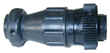
AMP-4M, 4 pin male: The AMP-4M (p/n 900030-000) has 4 sockets and uses a gripper ring to secure it. The connector is not designed to be connected or disconnected underwater. This connector is pictured with the small cover. Note: This connector has sockets but is considered a MALE connector. |
 PDF data sheet |
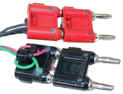
Banana plugs (Red & Black): The BNP-1 (black, p/n J051) and BNP-2 (red, p/n J050) double banana plugs are most commonly used on umbilicals for either 2- or 4-wire hard wire communications. The picture to the left shows how you can stack them. |
 PDF data sheet |
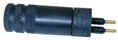
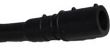
Hi-Use -- The OTS-4P (p/n 900270-000) Hi-Use® connector is used on many products. The most common are OTS EMA-2 and ComRopes. The OTS-4P has 2 pins and 2 sockets. A potting sleeve is included with the product. The OTS-4P can be connected underwater. (Note: this is an OTS manufactured connector). |
 PDF data sheet |
Marsh Marine Female 4 pin connector: Mates to the 4 Pin Marsh Marine Male Waterproof (W.P.) connector as often used on Kirby Morgan EX0-26BR full face masks and others. Allows for four wire/ round robin communications when diver to diver communication is desired. |
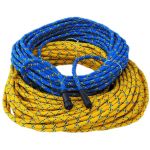
OTS ComRope (Assembled)
| Breaking Strength of Wire in Rope: | 340 lbs. wire in rope will break. |
| Breaking Strength of Rope with Wire: | 800 lbs (average) rope will breakk. |
| Wires: | 4 wires — Quad 4 Balanced Cables. |
| Size: | 7/16" (Approx 10mm) with wire. |
|
|
OTS ComRope is shipped assembled complete with connectors that suit your needs on either end. As they are built to order, please allow a few weeks lead time. |
Due to weight, a $25.00 shipping charge per rope will be added to each ComRope order
during final processing.
Surcharges will not display in the
Shopping Cart, but will be added at the time your order ships.
* Please note that all ComRope assemblies are custom built to order. Once your order is placed it cannot be cancelled or returned.*
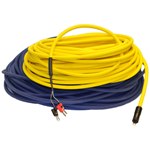
OTS Floating Comm Cable (Assembled)
OTS Floating Comm Cable is High Strength Twaran Aramid Fiber Braid / Foamed Thermoplastic Polyurethane Jacket.
Available in two colors: blue and yellow.
| Breaking Strength of Wire in Rope: | 340 lbs. wire in rope will break. |
| Breaking Strength of Rope with Wire: | 2,592 lbs. (average) rope will break. |
| Wires: | 4 x 22 Guage Conductors / Twisted, Shielded Pairs |
| Size: | 14mm with wire. |
|
|
OTS Floating Comm Cable is shipped assembled complete with connectors that suit your needs on either end. As they are built to order, please allow a few weeks lead time. |
Due to weight, a $25.00 shipping charge per rope will be added to each ComRope order
during final processing.
Surcharges will not display in the
Shopping Cart, but will be added at the time your order ships.
* Please note that all ComRope assemblies are custom built to order. Once your order is placed it cannot be cancelled or returned.*
|
|
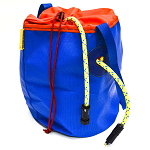
ComRope Bag: ComRope Bag is manufactured from a heavy duty, high visibility mesh that features a reinforced mouth with an adjustable draw-string Nylon cord. A convenient opening on the side of the bag allows you to access the topside connection of the ComRope. The ComRope Bag is the perfect accessory for tenders who require portability. Holds up to 200' of OTS CR-4 ComRope. |
Price: $79.00
|

|
OTS Recommended Setup of Diver ComRope |
|
|
It is extremely important that the divers are dressed out in a manner that will strain-relieve the ComRope. Commercial dive schools typically instruct students to have the ComRope tethered to the diver’s harness or buoyancy compensator with a quick release. If someone pulls on the ComRope and the diver loses control of the ComRope, the pull is on the harness, not on the diver’s mask. This setup prevents accidental removal of the diver’s mask. |
|
|
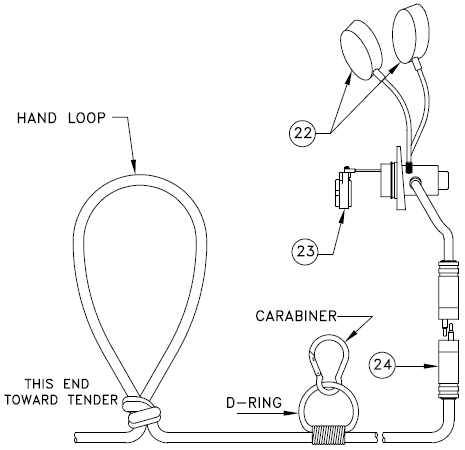
Strain-relieve the ComRope in two places on the diver’s end. The first point should have some sort of “D-ring” heavily taped or tied about 4 feet from the Hi-Use® connector (# 24). This “D-ring” will be clipped onto the diver’s harness or buoyancy compensator via a carabiner or some good quality quick-disconnector. This connection will help prevent the ComRope from pulling on the diver’s full-face mask. If the diver is set up properly, the tender’s pulling on the ComRope should pull on the diver’s hand loop first. If the diver is not holding the hand loop, the strain should go to the belt “D-ring,” not the diver’s full-face mask or diver’s earphone-microphone assembly (# 22 & 23). |
|
| OTS recommended procedure to attach D-ring To Comm Rope. | |
| The diver should tie the ComRope, making a hand loop about 6 inches in diameter about 10 feet from the Hi-Use® connector. The diver will now be secured to his harness or buoyancy compensator and have a hand-hold he should hold during the dive. The diver should have control of the ComRope throughout the dive. He should feel what is going on, giving topside directions when slack needs to be taken up or when more rope needs to be paid out. If the diver lets go of the hand-hold, the carabiner–D-ring combination will absorb the tension. In the event the diver must break lose of the ComRope totally (i.e., in an emergency), the diver should let go of the ComRope hand-hold and unsnap the device holding the D-ring. The diver then should let topside know what is going on before he detaches the Hi-Use® connectors. The diver then should proceed directly to the surface and reestablish communications. | |
| The tender should ensure the ComRope on his end is also strain-relieved in some manner. This will prevent the diver or topside tender from pulling on the connections made on the electronics module. | |
|
|
|
SAFETY NOTE: |
|
|
While these are excellent reference materials, in no way should this information be considered a replacement for proper training for the specific type of diving in which you plan to participate.